Wednesday, February 1, 2017

CHAPTER 5 : Organizational Structures That Support Strategic Initiatives

ORGANIZATIONAL STRUCTURES
  • Organizational employees must work closely together to develop strategic initiatives that create competitive advantages.
  • Ethics and security are two fundamental building blocks that organizations must base their businesses upon.
INFORMATION TECHNOLOGY ROLES AND RESPONSIBILITIES
  • Information technology is a relatively new functional area, having only been around formally for around 40 years.

Recent IT – related strategic positions:

⏩ Chief Information Officer (CIO)
⏩ Chief Technology Officer (CTO)
⏩ Chief Security Officer (CSO)
⏩ Chief Privacy Officer (CPO)
⏩ Chief Knowledge Officer (CKO)

Chief Information Officer (CIO) – oversees all uses of IT and ensures the strategic alignment of IT with business goals and objectives.

Broad CIO functions include;
  • Manager – ensuring the delivery of all IT projects, on time and within budget.
  • Leader – ensuring the strategic vision of IT is in line with the strategic vision of the organization.
  • Communicator – building and maintaining strong executive relationships.

                               Image result for average cio compensation

Chief Technology Officer (CTO) - responsible for ensuring the                                                                                                                       throughput,speed,accuracy,availability and realibility of IT.

Chief Security Officer (CSO) - responsible for ensuring the security of IT systems.

Chief Privacy Officer (CPO) - responsible for ensuring the ethical and legal use of information.

Chief Knowlegde Officer (CKO) - responsible for collecting,maintaining and distributing the                                                                     organization's knowledge.

➤THE GAP BETWEEN BUSINESS PERSONNEL AND IT PRSONNEL
  • Business personnel possess expertise in functional areas such as marketing, accounting and  sales.
  •  IT personnel have the technological expertise.
  • This typically causes a communications gap between the business personnel and IT personnel.
➤IMPROVING COMMUNICATIONS
  • Business personnel must seek to increase their understanding of IT.
  • IT personnel must seek to increase their understanding of the business.
  • It is the responsibility of the CIO to ensure effective communication between business personnel and IT personnel.
ORGANIZATIONAL FUNDAMENTALS – ETHICS AND SECURITY
  • Ethics and security are two fundamental building blocks that organizations must base their businesses on to be successful
  • In recent years, such event as the 9/11 have shed new light on the meaning of ethics and security

ETHICS 

Ethics – the principles and standards that guide our behavior toward other people.

Privacy is a major ethical issues;

Privacy – the right to be left alone when you want to be to have control ever your own personnel possessions and not to be observed without your consent.

Issues affected by technology advances:

Intelligent property
Intangible creative work that is embodied in physical form
Copyright
The legal protection afforded an expression of an idea, such as a song, video game and some types of proprietary documents
Fair use doctrine
In certain situations, it is legal to use copyrighted material
Pirated software
The unauthorized use, duplication, distribution or sale of copyrighted software
Counterfeit software
Software that is manufactured to lock like the real thing and sold as such

  • One of the main ingredients in trust is privacy
  • Primary reasons privacy issues lost trust for e-business

1.
Loss of personnel privacy is a top concern for Americans in the 21st century
2.
Among Internet users, 37 percent would be “a lot” more inclined to purchase a product on a websites that had a privacy policy
3.
Privacy/security is the number one factors that would convert Internet researchers into Internet buyers


SECURITY
  • Organizational information is intellectual capital it must be protected.
  • Information security-the protection of information from accidental or intentional misuse by                                           persons inside or outside an organization.
  • E-business automatically creates tremendous information security risks for organizations.

CHAPTER 4 : Measuring The Success Of Strategic Initiative


MEASURING INFORMATION TECHNOLOGY’S SUCCESS

  • Key performance indicator – measures that are tied to business drivers
  • Metrics are detailed measures that feed KPIs
  • Performance metrics fall into the nebulous area of business intelligence that is neither technology, nor business centered, but requires input from both IT and business professionals

EFFICIENCY AND EFFECTIVENESS

  • Efficiency IT metric – measures the performance of the IT system itself including throughput, speed, and availability
  • Effectiveness IT metric – measures the impact IT has on business processes and activities including customer satisfaction, conversion rates, and sell-through increases

BENCHMARKING – BASE LINING METRICS

  • Regardless of what is measured, how it is measured, and whether it is for the sake of efficiency or effectiveness, there must be benchmarks – baseline values the system seeks to attain
  • Benchmarking – a process of continuously measuring system results, comparing those results to optimal system performance (benchmark values), and identifying steps and producers to improve system performance
Efficiency IT metrics focus on technology and include :

                               Image result for efficiency it metrics focus on


Effectiveness IT Metrics focus on an organization's goals,strategies,and objectives that include :

Image result for effectiveness it metrics focus on

THE INTERRELATIONSHIPS OF EFFICIENCY AND EFFECTIVENESS IT METRICS

-Security is an issue for any organization offering products or services over the Internet.
-It is inefficient for an organization to implement Internet security, since it slows down processing

      ·However, to be effective it must implement Internet security.
      ·Secure Internet connections must offer encryption and Secure Sockets Layers                    (SSL denoted by the lock symbol in the lower right corner of browser)


                                 Image result for INTERRELATIONSHIPS OF EFFICIENCY AND EFFECTIVENESS IT METRICS

➤METRICS FOR STRATEGIC INITIATIVES
  • Website metrics.
  • Supply chain management (SCM) metrics
  • Customer relationship management (CRM) metrics
  • Business process reengineering (BPR) metrics
  • Enterprise resource planning (ERP) metrics 

Image result for supply chain management metrics

Image result for CUSTOMER RELATIONSHIP MANAGEMENT METRICS

Image result for BPR AND ERP METRICS

CHAPTER 3 : Strategic Initiative For Implementing Competitive Advantages


Strategies initiatives

Organizations can undertake high-profile strategic initiatives including:
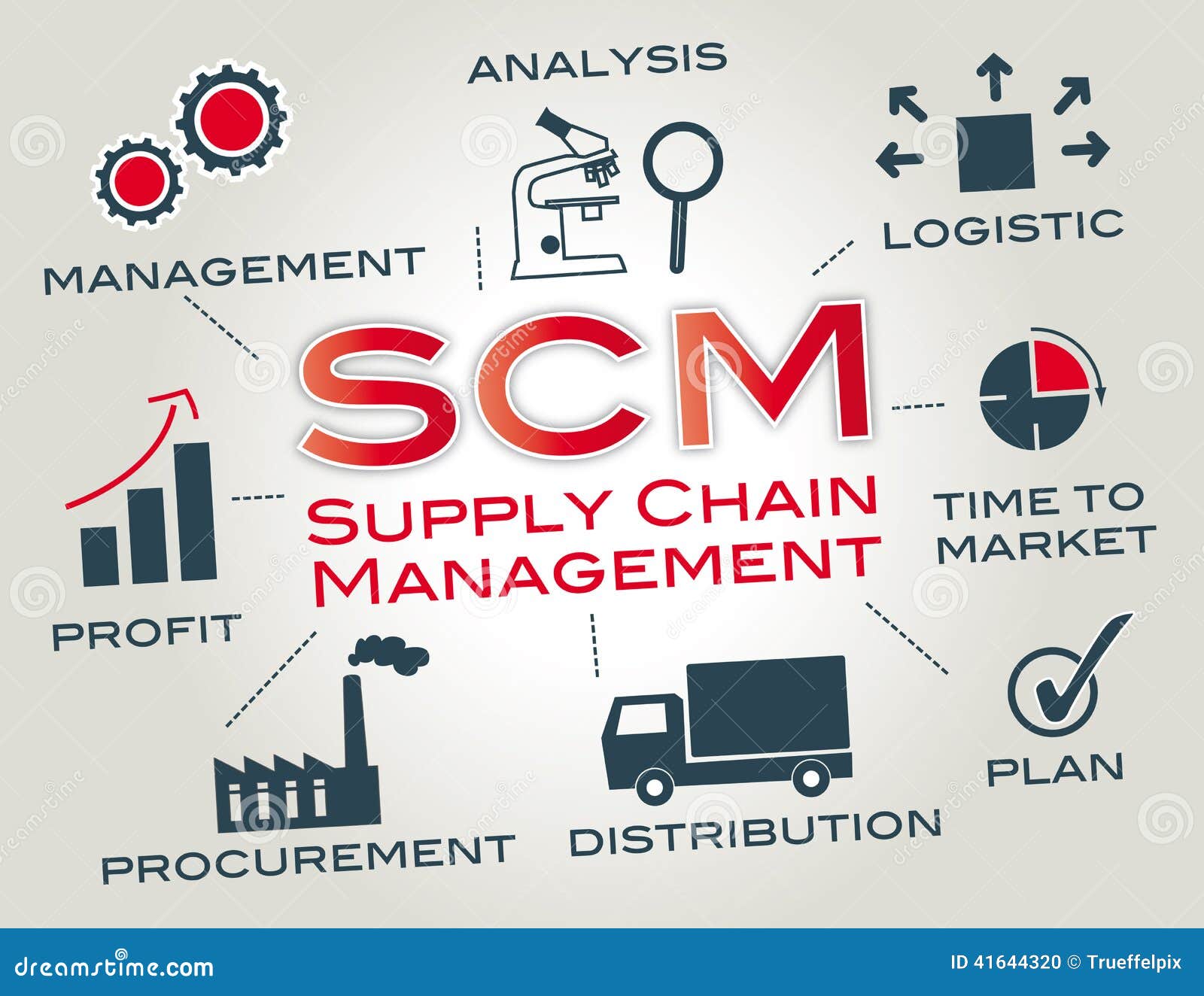
  • Supply chain management (SCM)
  • Customers relationship management (CRM)
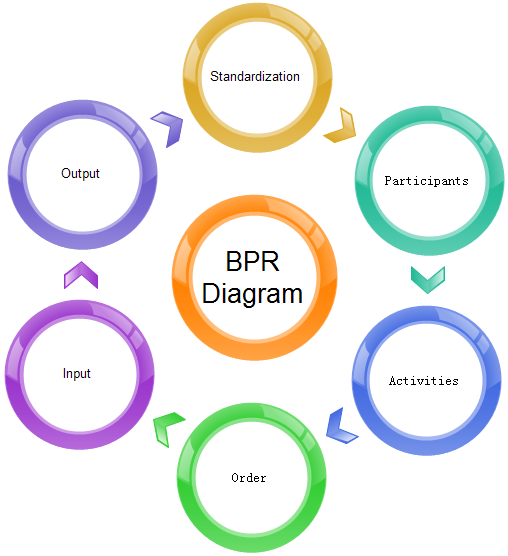
  • Business process re engineering (BPR)
  • Enterprise resources planning (ERP)
Supply Chain Management (SCM)


Image result for SCM

It involves the management of information flows between and among stages in a supply chain to maximize total supply chain effectiveness and profitability.

Four basic components of supply chain management include:
  • Supply chain strategy – strategy for managing all resources to meet customers                                             demand
  • Supply chain partner – partners throughout the supply chain that deliver finished                                        products,raw materials and services
  • Supply chain operation – schedule for production activities
  • Supply chain logistics – product delivery process

Effective and efficient SCM systems can enable an organization to:
  • Decrease the power of its buyers
  • Increase its own supplier power
  • Increase switching costs to reduce the threat of substitute products or services
  • Create entry barriers thereby reducing the threat of new entrants
  • Increase efficiency while seeking a competitive advantages through cost leadership

➤Customers Relationship Management (CRM)

                       Related image

-Its involves managing all aspects of a customer’s relationship with an organization to increase customer loyalty and retention and an organization’s profitability.  

-Many organizations, such as Charles Schwab and Kaiser Permanente, have obtained great success through the implementation of CRM systems.

-CRM is not just technology, but a strategy, process and business goal that an organization must embrace on an enterprise wide level.

CRM can enable an organization to:
  • Identify types of customers
  • Design individual customer marketing campaign
  • Treat each customer as a individual
  • Understand customer buying behavior


➤Business Process Reengineering (BPR)

                                      Image result for BUSINESS PROCESS REENGINEERING

- It is a standardized set of activities that accomplish a specific task, such as processing a               customer’s order.

-The analysis and redesign of workflow within and between enterprises.
  • The purpose of BPR is to make all business processes best in class
      - Reengineering the Corporation – book written by Michael Hammer and James                                                                     Champy that recommends seven principles for BPR
     
      - Finding Opportunity Using BPR
  • A company can improve the way it travels the road by moving from foot to horse and then horse to car
  • BPR looks at taking a different path, such as an airplane which ignore the road completely
  • Types

Enterprises Resource Planning (ERP)

It  integrates all departments and functions throughout an organization into a single IT system so that employees can make decisions by viewing enterprise wide information on all business operations.

-Keyword in ERP is “enterprise”.

-ERP systems collect data from across an organization and correlates the data generating an enterprise wide view.

CHAPTER 2 : IDENTIFYING COMPETITIVE ADVANTAGE


INTRODUCTION
  • Michael Porter’s Five Forces Model is useful tool to aid organization in challenging decision whether to join a new industry or industry segment. Identifying Competitive Advantage have 3 points which is :
  1. Five Forces Modal
  2. Generics Strategies
  3. Between business process and value chain.
Five Forces Model

1. Buyer Power
  • High - when buyers have many choices for whom to buy.
  • Low - when their choices are few.
2. Supplier Power
  • High - when buyers have many choices for whom to buy.
  • Low - when their choices are many.
3. Threat of substitute products or services
  • High - when there are many alternatives to a product or services.
  • Low - when there are few alternatives from which to choose.
4. Threats of new entrants
  • High - when it is easy for new competitors to enter a market.
  • Low - when there are significant entry barriers to entering to market.
5. Rivalry among existing companies.
  • High - when competition is fierce in a market.
  • Low - when competition is more complacent.
The Three Generics Strategies

1. Cost leadership
  • Becoming a low-cost producer in the industry allows the company to lower prices to customers.
2. Differentiation
  • Create competitive advantage by distinguishing their products on one or more features import to their customers.
3. Focused Strategies
  • concentrates on either cost leadership or differentiation
Between Business Process and Value Chain

Supply Chain - a chain or series of processes that adds to product & service for customer.
Add value to its products and services that support a profit margin for the firm.


Monday, January 2, 2017

CHAPTER 1 : BUSINESS DRIVEN TECHNOLOGY 


INFORMATION TECHNOLOGY ROLE IN BUSINESS

  • Information technology is everywhere in business
  • Anyone involved in business must understand technology


INFORMATION TECHNOLOGY'S IMPACT ON BUSINESS OPERATIONS


  • Organizations typically operate by functional areas or functional silos.
  • Functional areas are interdependent.


INFORMATION TECHNOLOGY BASICS
  • Information technology (IT) - a field concerned with the use of technology in managing and                                                       processing information
  • Information technology is an important enabler of business success and innovation.
  • Management information systems (MIS) - a general name for the business function and academic discipline covering the application of people, technologies, and procedures  to solve business problems.
  • MIS is a business function, similar to Accounting, Finance, Operations, and Human Resources.
  • When beginning to learn about information technology it is important to understand.
    • Data, information and business intelligence IT resources
    • IT cultures
INFORMATION
  • Data - raw facts that describe the characteristic of an event.
  • Information - data converted into a meaningful and useful context
  • Business Intelligence - applications and technologies that are used to support decision-making efforts.

DATA, INFORMATION AND BI

DATA TURN INTO INFORMATION

DATA INFORMATION AND BI 

INFORMATION TURNED INTO BUSINESS INTELLIGENCE


IT RESOURCES


  • People use
  • Information technology to work with
  • Information


IT CULTURES


Organizational information culture include ;
  • Information-Functional Culture - employees use information as a means of exercising influence or power over others.
  • Information Inquiring Culture - employees across departments search for information to better understand the future and align themselves with current trends and new directions.
  • Information-Discovery Culture - employees across departments are open to new insights about crisis and radical changes and seek ways to create competitive advantages.
  • Information-Sharing Culture - employees across departments trust each other to use information (especially about problems and failures) to improve performance.


O